Declutter kitchen cabinets in a small kitchen, one shelf at a time
Declutter kitchen cabinets in a small kitchen, one shelf at a time
The short version
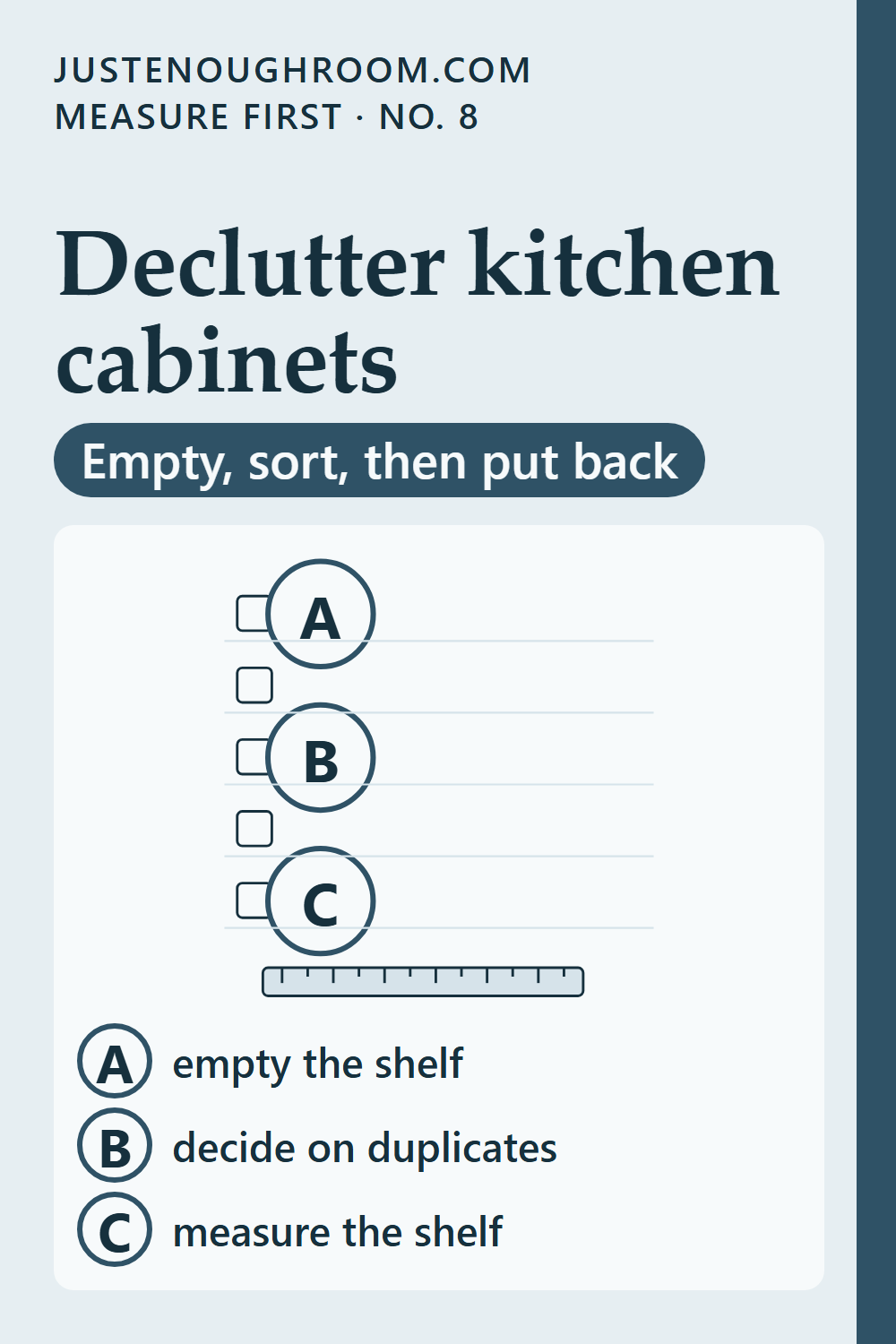
- A · empty the shelf
- B · decide on duplicates
- C · measure the shelf
Empty one shelf, keep what you cook with, and measure the shelf before you shop for organizers.
https://justenoughroom.com/kitchen-cabinet-declutter-checklist/
In a small kitchen, the things you reach for each day can end up behind things you seldom touch. To declutter kitchen cabinets without emptying the whole room, work through one cabinet at a time.
Finish each cabinet by measuring it. If you buy an organizer later, you will already have the numbers.
What you need
- A clear spot on the counter or the table
- A box for things that leave the kitchen
- A tape measure
- A damp cloth for the empty shelves
-
Empty one cabinet completely (A)
Take out everything, including what is pushed to the back. Wipe the shelf while it is empty.
-
Keep what you cook with
Put back the items you cooked, ate or served with in the last few months, plus seasonal pieces you know you use once a year. Set aside duplicates, gadgets you have not touched and anything that belongs in another room.
-
Give duplicates one decision (B)
For each set of duplicates, keep the one you reach for and move the rest to the box. Make the decision once, at the counter, instead of returning them to the shelf.
-
Place daily items between your shoulders and your knees
Put the things you use each day on the shelves that are easiest to reach. Items you use a few times a year can go toward the back of a shelf. Save the top shelf for things you can lift down easily with one hand while you stand on a step stool, and keep anything bulky or awkward to handle on a lower shelf, even if you seldom use it.
-
Measure the shelf and the door opening before you shop (C)
Measure the inside width of the cabinet, then the width of the door opening between the edges of the face frame, and note where the hinges sit when the door is open. An organizer has to pass through the opening and clear the hinges, so keep the smaller width. Measure the depth from the back wall to the inside of the closed door, noting anything mounted on the door, and the height between shelves.
Write the numbers on a sticky note inside the cabinet door. When you look at an organizer, compare these numbers with the maker's listed size and leave a little room on each side.
How this page was made
Drafted with AI tools and checked by automated rules and a second AI review before publishing. Spotted an error? Write to [email protected]. Nothing on this page is a product claim, and there are no store links here. How we choose.