Closet shelf depth above the rod: what to measure and why
Closet shelf depth above the rod: what to measure and why
The short version
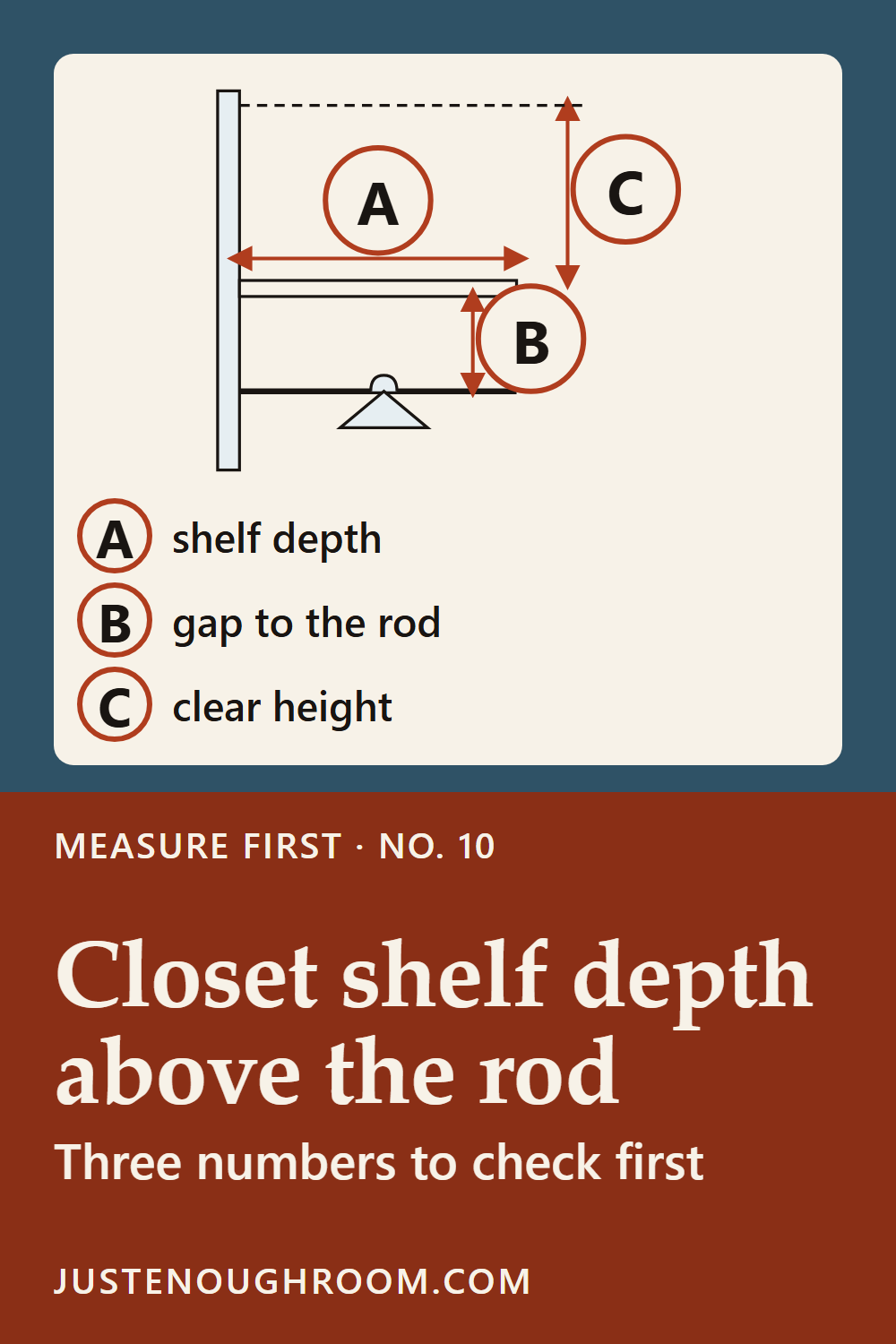
- A · shelf depth
- B · gap to the rod
- C · clear height
Compare the shelf depth, the gap to the rod and the clear height with each bin's listed size.
https://justenoughroom.com/closet-shelf-depth-above-rod/
Closet shelf depth above rod height is easy to overlook in a reach-in closet. A bin up there has to sit on the shelf without hanging over the hangers, and it has to come down past the door frame and anything mounted overhead.
This page walks you through three measurements, one check for a light fixture, and a way to compare your numbers with a bin's listed size before you buy.
What you need
- A tape measure
- A step stool
- A flashlight for the back of the shelf
- A pencil and paper
-
Find the usable shelf depth (A)
Measure from the front edge of the shelf to the back wall. If a support bracket or a gap sits at the back, stop the tape there. Write this down as the shelf depth. Look for bins whose listed depth is smaller than this number, so nothing sticks out past the front edge.
-
Check the gap to the rod (B)
Measure from the underside of the shelf down to the top of the rod. Your hanger hooks pass through this space when you lift clothes off the rod. Plan for nothing on the shelf to hang down into it, such as a basket handle or a label that dangles over the edge.
-
Measure the clear height above the shelf (C)
Measure from the top of the shelf to the ceiling. Then measure from the shelf to the top of the door opening. If the opening is lower than the ceiling, a tall bin can fit on the shelf and still not come out through the door.
Write down the smaller of these two readings as your clear height. Leave any light fixture out of this number; the next step deals with it separately.
-
Leave the stretch under the light empty
If a light fixture or bulb sits above the shelf, mark on your sketch the part of the shelf below it and how far the fixture reaches toward the front. Plan no bins or boxes for that stretch, whatever their height.
Then measure the shelf width left on each side of that open stretch. Those widths, not the full shelf, are the spaces you have for bins.
-
Compare each bin with your numbers
On the maker's page, find each bin's outside width, depth and height. Check the width against the open stretches from the last step, the depth against your shelf depth and the height against your clear height, then leave a little room so the bin slides out easily. Keep this top shelf for the things you use least, and keep what you reach for often on a lower level.
How this page was made
Drafted with AI tools and checked by automated rules and a second AI review before publishing. Spotted an error? Write to [email protected]. Nothing on this page is a product claim, and there are no store links here. How we choose.